Thursday, 30 January 2020

#writingishard3 - Synopsis


 Writing is hard. And everyone’s journey is different. There is a TEDtalk doing the rounds at the moment, which tells a fabulous journey that happens to be a very quick writer’s journey. I just want to say don’t get disheartened by this. It doesn’t make you any less of a writer if your journey is longer. Writing takes tenacity. Have faith in your writing. You will get there.

The journey can be long...

 I have had a request from the ever-lovely Annaliese Avery. We all think writing a book is hard, but it is really easy in comparison to writing a synopsis. That is like pulling teeth. There is no definitive way to write a synopsis, but I am going to offer some suggestions to help you. I would suggest you look at Nicola Morgan’s book Write a Great Synopsis – An Expert Guide. She goes into a lot of detail and it is accessible.

What I will say you must do is: Always check on the agent’s website to check exactly what their submission guidelines are, then adhere to them. They are not optional. If they say a one-page synopsis that’s what you do. On the other hand, if they say two pages or more that’s what you provide.
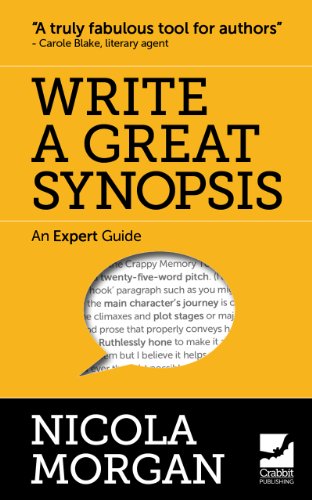
Image result for write a great synopsis - an expert guideIn general, it is suggested that the synopsis should be no more than one or two pages. What a synopsis is not, is an outline or chapter breakdown. Instead, it tells the reader what the book is about and gives the sense that the author has managed to write a book with a complete narrative and an arc. The synopsis gives details of the main characters and the main plotlines while not dealing with minor characters and subplots. It should convey conflict and setting, themes even the denouement while giving a sense of the voice.

Unlike, the chapters which should be double spaced the synopsis can be single-spaced. Once again it should have the title of your novel, who it is aimed at – middle grade/teen/YA and that it is written by you. It should be in a clear font – something like Ariel or Times New Roman – Point size 12. Don’t go smaller or they won’t be able to read it. Neither have ridiculously small margins in order to cram as much information into the two pages. Agents have seen it all before, and are not going to be impressed, or tricked by it. They are looking for a well written, concise and punchy synopsis that grabs their attention and informs them.

Do not be afraid to repeat information that has been said in your covering letter. In fact, you are almost guaranteed to do so, as you are likely to repeat your pitch. Avoid rhetorical questions. It is better to answer all the questions you pose in your synopsis. It should be written in the present tense even if your story is written in the past tense. In the same way, it should be written in the third person
Get to the core of your story
even if the story is in the first person while still getting across a sense of the voice and feel of the story. If your story has multi viewpoints, ensure that you get this across in the synopsis too. Most importantly though, ensure that there are no grammatical or spelling mistakes throughout - proofread it carefully.

This is based on Nicola Morgan’s method of writing a synopsis:

1.     Write your one-sentence pitch

2.     Expand it until you have a paragraph that you might use as your pitch paragraph in your submission letter (don’t be afraid to repeat information in synopsis and letter)

3.     Expand this by including what happens at the end, show how the main character’s journey is completed. This should give you two paragraphs.

4.     Then include climaxes and plot stages or major obstacles. Add those into your paragraphs. You may want to change the order for clarity. Hopefully, you now have at least a page.

5.     Connect them all together with beautiful prose. Focus on the important information and avoid the unnecessary.

6.     Hone it to within an inch of its life until it is ready for submission. Get others to look at it.
Don’t be afraid of it. Yes, writing a synopsis is hard but if you know what is at the core of your story it is much easier. Focus on that Think about what is really at the heart of your narrative. Use that to help you write your pitch and your synopsis.

Books are rarely rejected just because of a synopsis unless it is really badly written. Decisions are more likely to be based on a combination of the idea as pitched in the letter and the standard of the writing in the chapters. Some may suggest that the synopsis really is the least important part of the submission; however, and importantly, this does not mean you should not pay attention to it. Agents may need it to back up your submission. They will read it in order to feel confident that you really do have an idea that hangs together and that you can show that you understand your narrative fully. You are highlighting through your synopsis that this is a strong concept. They may also use it later when marketing your book. 

Good luck everyone – you can do this!


Wednesday, 22 January 2020

Exciting news - Read for Empathy Collection 2020

I am thrilled to say that the wonderful judges from the EmpathyLabUK have selected Flight for their Read for Empathy Collection 2020. In the collection, they look for books that have been well researched and written that will develop children's emotional vocabulary. They have picked some truly outstanding books and I feel honoured that Flight is among them.

Empathy is a core life skill and reading books is one way of helping us to become more empathetic. It helps us understand the world more because we get a chance to walk in someone else's shoes. To see how they might feel and to ask questions of the text and of ourselves. Thinking how we might respond in the same situation.

Here the judges talk about making the selection for the Read for Empathy Collection 2020


Highlighting this year's collection's themes:


Books provide us with an opportunity to escape our reality. To ask questions of ourselves and to provide hope. This is particularly important in a world that is increasingly full of hatred and a lack of compassion. Children need to know that the world doesn't have to be like that, that they don't have to be like that. That it is ok to be kind, to be different and to care.

When I wrote Flight, I was conscious that we are losing those that remembered what actually happened during the Second World War. These are memories that should not be forgotten. Flight has multiple layers of empathy throughout it. Kizzy and Jakob both needed to remember what it was like to be part of a family again. They also showed what it was like to care so much for something that you are willing to put their safety before your own.

Thank you, judges, for picking Flight and I hope everyone enjoys reading it.


Thursday, 16 January 2020

#writingishard2


This time of year can be very hard, it is often dark and grey outside. There might’ve been pressure over the holiday period when well-meaning people ask, ‘Are you STILL wring your book?’ or ‘When IS your going to be published?’ It’s easy to feel overwhelmed, particularly if you feel like you have
Writing pressures
been writing/editing for a long time, you’re facing edits/rewrites, or it’s a blank screen blinking at you because you can’t think of an idea, but you know you want to write. It’s hard, but you need to ignore these pressures and focus on your writing.

One of the most important things you can focus on is the difference a story can make to the reader, particularly if you are writing for children or young adults. A story can help a reader escape their reality. It can provide a sense of hope and a belief that things can be all right in the end. Stories can be a way to understand the world we live in. We hear the term ‘windows and mirrors’ a lot, but it is important. A book can provide a window on someone else’s life, so a reader can walk in their shoes, or it can be a mirror, so a reader can see themselves in a story. This is particularly important when thinking about creating stories that are inclusive. Writers should not shy away from difficult and challenging themes as well because a book is a safe place for a reader to explore said themes. The stories provide an opportunity to ask questions of the narrative but also for the reader to ask questions of themselves. It helps them work out who they are, but just as importantly, who they are not.

In a world that is becoming increasingly hostile and intolerant, it is important to encourage empathy. It is proven that reading stories can create empathy. Empathy Lab is doing great things to #EmpathyDay is 9th June this year. They also create a reading list entitled Read for Empathy Guides for Primary and Secondary which schools. Empathy is a key element of emotional intelligence, and part of helping children to appreciate others. As writers we understand we need to create fully rounded characters and that includes emotional depth: even the ‘baddies’ in a story should be making decisions that are right for them, emotionally, at that particular moment.
highlight the importance of empathy around the country.

Philip Pullman
When thinking about your writing, I will add a caveat for all writers. I have spent many years supporting aspiring writers in my jobs either as a Creative Writing Lecturer or working as an editor/workshop leader at The Golden Egg Academy. There is a moment when a new writer comes to me and confidently tells me about their story starting with the words ‘My story is going to give a message about…’ It might be any contentious subject or a moral message of some sort, whatever it is my heart sinks. I can understand the desire to want to write a story like that but invariably they become didactic. Philip Pullman summed it up brilliantly in his acceptance speech for his Carnegie Medal when he suggested ‘”Thou shalt not” is easily forgotten but “Once upon a time…” is remembered forever.’ What this means to me is that the story has to be the priority, not the message. Focus on that and let the narrative do the work rather than lecturing the reader.

Keep writing your stories, focus on the hope you can create and empathy. Remember books show that the world can be a better place and that the reader can make it so: as Neil Gaiman has suggested when talking about reading: ‘You’re finding something out as you read that will be vitally important for making your way in the world. And it’s this: The world doesn’t have to be like this. Things can be different.’

Stories bring hope, even in these difficult times. Remember the difference you can make.  Good luck with your writing. I know it’s hard, but you can do it.

'Those Sweet Words' by Norah Jones for today


Wednesday, 1 January 2020

#writingishard1

#writingishard1
HAPPY NEW YEAR! And welcome to my new #Writingishard series. This series is for all writers whether you are new writers just starting, you are a little way along the journey, a debut author, one battling with your second novel, or several books under your belt. Whoever you are, if you love writing you will also understand that writing is hard. It can be such a long journey. It took me well over ten years from beginning to take my writing seriously to having my first novel published. The idea behind #writingishard is to provide support, a shoulder to lean on, a place to celebrate occasionally the joy of writing, but to acknowledge how difficult it is. It is somewhere to find useful sources and where I can provide helpful strategies that might help you through those difficult times. A place you can come back to at any time for support. Knowing we've got your back.

The intention is to post every other Thursday starting on the 16th of January and using the hashtag  #writingishard, so do keep an eye out for it. When I post feel free to add to the posts if you have questions or additional useful information that you feel might help people or you need help. Don't be afraid to ask. The idea is for this to be a safe and supportive place. Not a critical one. There is no right or wrong way to write. You have to find what works for you. I will be sharing some of the ways I have found that works for me and the strategies I use. That doesn't necessarily mean they will work for you, but I am a great believer that you never stop learning when you are a writer. I always like to listen to how others do things, as I often find I come away with a useful nugget that I can apply to my writing and improve how I do things.

Me!
Probably most of you who are reading this already know who I am but just in case, here's a bit of an introduction as to who Ness Harbour, or Vanessa Harbour depending what you want to call me, actually is:

I am a writer: 10 years ago I wrote young adult fiction, in 2018 Firefly published my debut middle grade novel Flight. When I started at university I thought I wrote for adults. I also dabble in poetry - but nobody ever sees that! I have had a short story published in Citizens of Nowhere.

In 2011 I got a PhD - this was a creative and critical one which included writing a YA novel.

I have lectured in creative writing for thirteen years at undergraduate and postgraduate levels. I also supervise PhDs. I have also lectured in English and children's literature.

I have had the privilege of being involved with the Golden Egg Academy since it started and my wonderful friend Imogen Cooper came to me and said 'I've had an idea, do you want to be involved,'. I am very lucky.

I happen to be disabled - my grandsons call me bionic.

I am a mother (a single parent) and a grandmother. I've been a carer.

I love finding beautiful things in the world and having a good laugh. I also think our lives should have its own musical soundtrack!

I wrote three novels before Flight was picked up.

I am currently working on my second novel with Firefly and also on a sequel to Flight. I love visiting schools and hearing from my young readers, teachers and librarians.

I hope you will join me on this journey and I hope #writingishard can make it a little easier for you.

Let's fill the new decade with lots of positivity

Ness

For memories and for happiness, I love this song by McFly


Sunday, 30 June 2019

A week full of events - schools and festivals - living the best llife

Thank you, Gordon Smith, for photo
LtoR Gordon Smith, Antoinette Moses,
Melvin Burgess & me
Taken at Fly Festival
I have had a wonderful week full of events. It has been joyous and reminds me of all the good parts of being an author. The best bit was the chance to be in touch with my audience, with my readers. What was particularly interesting was that in a week I managed to cover virtually all versions of events you could imagine.

On Monday I went into school on the edge of the New Forest where I did three workshops with two Year 7 groups and one Year 8. They were brilliant, so inspired. The workshop was based on the senses and walking in someone else's shoes. Asking them 'What would you do?' in a certain situation. They came up with some great ideas and were very thoughtful in their processes. The school was taking part in the Wessex Literary Festival, so had lots of activities planned. It was good to see when you hear of so many schools no longer inviting authors in.

It was good fun working with Years 7 and 8. I was pleased to see that I was right in thinking that Flight could be used across the board and up to KS3 as well as KS2.

The students were engaged and often, I apologise for the cliche, but they did think outside the box. I enjoyed getting them to think about what they would feel like if they were a child during the Second World War. What emotions they might experience.

Using a variety of items that I brought in, I challenged them also to use all their senses and not just sight when writing. Developing upon the idea of 'show not tell' or dramatisation, where the reader experiences the story alongside the main character. They certainly embraced this, though weren't too keen on the smell of Wright's cold tar soap!!

On Tuesday I had a chance to do a Skype session with Year 5 at Broseley School as part of their LitFest. I felt very honoured to do this as Broseley School is close to my heart as I am their #BookBuddy. You can check out on my website out the photos of the Book Nook they created.

Unfortunately I wasn't able to get up to the school this time for a visit, so instead, we did it via Skype, which was brilliant. We did a Q&A session. The pupils asked some fabulous and original questions. They were obviously well thought out and considered. I confess though, one of them really stood out. The boy who asked it was quite nervous because it could have been perceived as rather a personal question. The class had done their research into me and this boy was intrigued by the fact I was a disabled author. He wanted to know what this meant for me as an author. At the moment, with the drive for diversity and inclusivity, it was the best question ever, as it gave me an opportunity to talk about what it means to be a disabled author.

The pupils were a delight and the Skype worked really well! It was a joy to do. I was buzzing when the call finished because they were so lovely. There is nothing better than working with your potential readers.

The week ended on a high with a trip up to the University of East Anglia and the Fly Festival of Literature for Young People, organised by Antoinette Moses. It is an incredible Festival, it is a week full of workshops and 'in conversation' sessions. I was lucky enough to be invited by Antoinette to be part of the finale and be 'in conversation' with the Festival's patron Gordon Smith. This was Antoinette's last festival as she retired on the last day too. I felt very honoured to be part of that as she has done an incredible job over the years.

I knew both Antoinette and Gordon via Social Media. It was wonderful to meet them IRL. We sat talking and there were so many laughs. You know when sometimes you meet people and you immediately click, it feels like you have been friends for years and years. It was just like that. The best tonic ever after a difficult few months. I was also thrilled because I had chance to catch up with Melvin Burgess. I love Melvin dearly. His book Junk was the starting point of my PhD and he has been so supportive for many years now. It is always wonderful to see him.

The 'in conversation' was fabulous. Antoinette, Gordon and I sat in front of a group of a couple of hundred young people and chatted about writing, our books, other people's books and inspiration. I always find it interesting talking to others about their writing processes. Here are some useless bits of information I gleaned from these discussions (but I found them interesting):

1. Both Antoinette and I like new notebooks when we starting writing novels
2. Gordon and I are 'pantsers' when we write
3. I like doing research. Gordon doesn't.
4. Gordon wrote a book that barely needed editing, so it was virtually the first draft that was published (I confess I had a bit of writing envy at this)
5. Antoinette and I quite like editing. Gordon doesn't
6. We all love that first rush of a new story

The questions once again from the audience were incredible. One question was 'what would you do if you weren't an author?' I think as part of the answer to that both Gordon and I planned to take a year out to drive super trucks in the US...

This was just one week. Thank you to all involved for such an incredible week. Now I am back home (8 hour round trip in the car) and am writing. I am definitely living the dream as an author. It is the best and toughest job in the world.

Advice for doing events...prepare...prepare...prepare

It's a happy day after a glorious week so it seemed right to have a bit of Black Eyed Peas


Friday, 17 May 2019

#mentalhealthawareness

It is mental health awareness week/month depending on what you read. Mental health is something I am very conscious of. It is has had an impact on members of my family in many ways. Some of my family live with its consequences on a daily basis. It is part of my life too. I have been and are being treated for depression and anxiety.

Writing is a huge part of my coping strategy. When I was first taken ill when things went wrong following the surgery and I couldn't eat. My world was tumbling down around me. I had to keep going, I was a single parent with three children. My escape valve was to write about it at the time. No one ever saw those scribblings, nor will they ever. But it rekindled my love of writing which is why I went to university and my life changed.

I am lucky in that I don't have to write because my world is falling to pieces anymore, but there are times I have to write because I am facing difficult and stressful situations at work or with my family. Those are snippets and witterings, not focused and dedicated writing. It is the focused and dedicated writing that I love doing.

I was lucky enough to have a novel published last summer (Flight published by Firefly Press). It was the fourth novel I had written, the first one to make it to the finishing post. I feel so well mentally when I can write regularly and get into writing a novel. I feel a great weight lift off and a good friend always says to me, 'I know when you are writing because you are in your happy place.'

It sounds simple then, doesn't it? If it makes you feel good then write every day, but it is not that easy. The nature of my job means that my head is full of other people's words. I am up against tight marking deadlines often. I am pressurised and the jobs are stressful. Not exactly conducive for sitting down and getting into the right headspace for writing. My head feels fractured.

I think I have mentioned this before, if I do get a moment to write, I take what I see as a Kintsugi, the Japanese art of mending using precious metal like gold, whereas in my case I mend my fractured mind by reading poetry before I start writing. Poetry is my precious metal.

I know if I can write I will feel better. Stronger, brighter, happier. More able to cope with whatever life throws at me. Find the strategies that help you. Don't be afraid to self-care. It is not selfish, it is a right. Note to self: Listen to that last sentence and carve out time to write!

At our worst times, my daughter always said this was our anthem. This is dedicated to her, as she was quite right. We did make and we did fly high. Lighthouse Family High

Thursday, 2 May 2019

New story, new research - my favourite time

I am at the beginning of a new book - no I can't tell you what it is about yet so don't ask- I love this part of writing though. Letting my imagination run free and allowing the story to evolve and develop as I write. Yes, I
Time to start research...
am a bit of a 'pantser', what I mean is that I don't plot intently before I start. I know what happens at the end but am never quite sure how I am going to get there. I was relieved to see on Twitter that Philip Pullman and Frank Cottrell Boyce do similar things. (As a writer you will know that we always look for our methods to be validated by others!!)

I also write cold and edit hot. I have spoken about this before. What I mean is that I get the basic story down so I know it works as a structure then go back in adding in the colour and detail. I am also lucky enough to have used the Golden Egg Academy 'Book Map' and as I write I do think in terms of that which does help too with the structure etc.

Please don't think I am telling you this is the only way to write. I am just telling you about how I write and what works for me. It may well not work for you. You have to find the way to write that works best for you.

I am hooked up in all the research I am doing. I love that bit. I am not sure if it is the academic in me but I find it very satisfying to research and find a tiny detail that there's a good chance that no one else will notice it in the book, but I'll know it is there. I try not to interrupt the flow of my writing when I am on a roll though and the words are tripping off the tips of my fingers. If I know I need to do extra research or expand an element following research, I highlight the section in yellow and may put a comment at the side to remind me, particularly if it is something specific I need to check. I can then spot it easily when I go back. I continuously research during the writing process, it never stops for me.

I am doing all sorts of research at the moment. Reading books, looking at the internet, YouTube and also talking to people. So important. However, a quick word of warning do remember to tell the person you are talking to this is for a story. I had an incident recently where I was asking a friend at the school gate if I could have a chat with her husband, who happens to be in the police force. I was explaining why by telling her part of the story. Trouble was I had forgotten to tell her it was fiction! Her response was shock and concern as to whether the child was all right. It was at this point I realised she thought I meant a real situation. I had to confess it was in my story.

This new story is going to take a lot of research, which is going to be interesting, but it is really important I get it right. This relates particularly to one of my characters, it is not a main character but it is a character with issues that needs to be handled appropriately. Luckily I have experience through close family members but also another relative teaches similar characters. However, I won't stop there. I will be referring to appropriate charities, lots more research and also Inclusive Minds.

There is no true story to inspire me this time, it is all down to me...I hope you are going to like it. Can't wait to immerse myself in the writing and doing more research...just need to finish the marking first!


The moon was important in Flight but I think the sun will play more of a role in the new book so thought we'd have a bit of 'Don't let the sun go down on me.' Thank you George Michael and Elton John!