Monday, 3 July 2023

Editors that give you courage


  Being able to trust your editor is so important. I became fully aware of this ten years ago this summer when I had to make some big decisions. At the time, I was working for the Golden EggAcademy (GEA) with aspiring writers, but also working with Imogen Cooper, the head of GEA, on one of my novels.

      It was a novel I had been working on for a very long time because it had been part of my PhD. However, I couldn’t get the heavy feet of my PhD thesis out of it. For me, it felt like a tick-box exercise and did what it needed to for the degree. Following a discussion, Imogen and I decided it was time to walk away from it. This is never an easy decision, particularly when you’ve been working on a project for a long time, but sometimes it is the right one. It must be done. Hilary Mantel once said, ‘The question is not who influences you, but which people give you courage.’ Imogen was someone who always gave me courage. She ensured I believed in myself and my work, as she did too.

            Imogen’s suggestion was to go away and write something new. Write whatever I wanted to. However, I did feel a little lost. I knew how terrified my students felt when I told them they could write about anything. Anything is an enormous subject. This was also the first time in a very long time where I was writing something without academic scaffolding supporting it where I discussed my reasoning behind every creative decision. It really would be standalone. That in itself was also terrifying. Could I remember how to be purely creative? Could I come up with an idea? Imogen gave me the strength to be brave and the power to be free. It was wonderful to have someone believe in me.

            I did what many writers do in the 21st Century. I turned to Google and asked it questions about things I was passionate about to see what turned up. It showed me an image of Director Alois Podhajsky and General Patton which led me down a rabbit hole of research to Operation Cowboy and the Spanish Riding School. The next most important writer’s question was posed ‘What if…?’


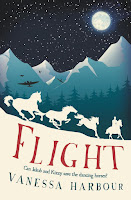
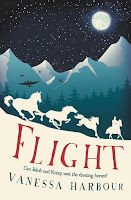
          Out of that question came a nugget of an idea and a first line. ‘If Jakob sneezed, he could die.’ I sent the outline of the idea to Imogen to see if she thought it worked. She came back with ‘Yes, write it!’ That first line never changed. And so, Flight was born. Five years later the next month, it was published by Firefly (where I worked with another great editor, Janet Thomas).

If it hadn’t been for a great editor giving me the courage to be brave and walk away from a project to find a new story, my life would have been very different. Find the people that give you courage. That great editor.

Sunday, 25 June 2023

Historical Fiction an important and safe tool for opening discourses with children about the present


Historical fiction is important because it makes history accessible, particularly in schools where it provides a tool to open dialogues about the present by looking through the lens of the past.  It can be less frightening if you open these discussions based on past events. There can be a greater experience of understanding for a child who looks at complex current issues through the historical fiction lens via the eyes and voices of child characters that they can empathise with. Giving them opportunities to ask questions of the narrative with answers that they may be able to apply to the world around them.  As Neil Gaiman points out stories are ‘a way of learning about life without experiencing it.’ (2016: 27) It is about experiencing challenging situations and considering what they, as a reader, would do in said situation within page turning safety.

Historical fiction continues to be popular with children and teachers alike. It is a convenient way to bring history to life through narrative. Giving the children a real sense of what it was like to be alive then as it is a chance to experience it while walking in someone else’s shoes, as Rowe suggests ‘[f]iction …allows the reader to actually experience the world from another person’s point of view.’ (2018).

            Unlike history where the risk is it will so often be written from the perspective of the victorious or the most powerful and educated as they are the ones creating the documents/resources used. Historical fiction can be told from the viewpoint of those whose voices were often silenced. The women, the children, the poor, the enslaved, the invaded and those who would now be considered to be part of the LGBTQ+ community. Fiction is a chance to investigate themes and ideas that might be ignored or glossed over in other circumstances. To take a different perspective. It is an opportunity to examine difficult subjects such as genocide, persecution, discrimination, displacement, death, poverty and reasons for war. In my own novels, Flight (2018) and Safe (2022), I explore the hidden stories of children’s experiences during the Second World War linked with persecution and displacement. Experiences which can easily be used to reflect on situations in the contemporary world.

Gaiman (2016:175), Ali Smith (Higgins, 2018) and Peter Bowker (2014) have all said at various points that if you want to find the truth look at fiction. Ally Sherrick’s recent novel Vita (2023) also plays brilliantly with the idea of truth. It explores the issue of whose truth to believe. As does Candy Gourlay’s Bone Talk (2018), which tells the story of a young Bontok boy and the impact the American’s have when they ‘bring war’ and colonization to the Philippines in the late 19th/Early 20th Century. Both highlight how every story has different perspectives and that there is no single truth.


    Sadly, we know that history repeats itself. Historical fiction can be used to highlight that some lessons are learned. That there is hope. However grim it is, we will find a way out of it because there are good people around. The work that Empathy Lab UK has undertaken highlights how reading fiction can create empathy in the reader. It can be used to increase compassion and understanding for those who have been ‘othered’ in the past, and in some cases, continue to be so. Encouraging a world where tolerance and inclusivity is the key rather than discrimination and persecution that we know is still sadly prevalent when history is still repeating itself.


Bibliography

Peter Bowker (2014) A Writer’s Journey From There to Here, BBC4 18 May 2014 21.30

Empathy Lab https://www.empathylab.uk/  

Neil Gaiman (2016) The View from the Cheap Seats, (London, Headline Publishing Group)

Candy Gourlay (2018) Bone Talk (London, David Fickling)

Vanessa Harbour (2018) Flight (Cardiff, Firefly)

Vanessa Harbour (2022) Safe (Cardiff, Firefly)

Charlotte Higgins (2018) ‘Fiction not lies is a way of telling the truth – Ali Smith in Edinburgh’, ‘Culture’ The Guardian, 21 August 2018   

Dora Byrd Rowe (2018) ‘The “Novel” Approach: Using Fiction To Increase Empathy’, Virginia Libraries, Vol 63 No1 www.ejournals.lib.vt/edu/valib/article/view/1474/2159  Accessed March 2019 

Ally Sherrick (2022) Vita (Frome, Chicken House)

Friday, 31 March 2023

Downloadable and printable resources for Safe and Flight


I have been busy creating downloadable resources for Flight and Safe that schools, libraries, home educators or bookshops could use. I had to do this because the increase in postage costs has meant it is prohibitively expensive to send things out now. Instead, I've created what I'd send out in downloadable versions so you don't miss out.  


Here they are listed below - just click on them:


Flight Poster

Safe Poster

Downloadable Letter from me.

Reading Inspiration poster - where can it take you

Reading Inspiration poster - shoes

Review exercise 


These are all downloadable and printable. I hope they can prove useful. 

There are also videos on YouTube that you can use too that are linked to Safe.

Also check out my social media: Facebook author page, Instagram and Twitter.

Obviously, you can buy either Flight or Safe via Firefly or through your local independent store.

Monday, 27 June 2022

Writing historical fiction? Keep detailed notes.

Just a few of my extensive
research books
I recently did a workshop on writing historical fiction at the IAmWriting Festival. In it, I reminded the attendees that anyone who writes historical novels more than any other writer will have to justify their writing. Only a week later I found myself doing exactly that when I received my most recent edits. 

The copy editor was quite rightly double-checking my research, a certain word I'd used, querying why I had made certain decisions. This can be quite a challenge because I have long-Covid and I don't always remember what I did yesterday, so remembering why I made a decision when writing over a year ago was going to be challenging.

Luckily for me, I might not be a planner, but I do make copious notes when I make a decision and I also list all websites I visit that I use for research. Plus being an academic, I tend to underline things that are relevant in books and use post-it notes to mark useful chapters. This means that when I am challenged over my research or my decisions I can go back to my notebooks and go through all my scribblings. I will invariably find the answer. Resulting in me being able to put a comment that explains my sources for the decision or if I think the editor has actually highlighted a weakness in my writing, I might add a sentence to add clarity as I may realise that I'm not getting across what I thought I was. It is too easy to fall into the trap of the author's assumed knowledge. I say this so often to my students, just because you can see it in your head, you need to get those images from your head onto the page by including some hints for the reader to pick up on.

Another resource
Helps with colours

It is a salutary reminder to keep good records so that you can support yourself and it also means you can double-check when you are editing or rewriting. Never underestimate the importance of good research. When writing historical fiction you will research far more than will ever appear in your story but it will inform your writing, adding depth to it. I love doing the research and finding a little nugget of detail which will lift the narrative. The reader may not notice it but I'll know it is there. The research should always have a light touch within the story and not be overwhelmed by it. The story comes first always.

I've a new idea for a children's story but am also writing a historical novel for adults at the moment and that is interesting. I have found some wonderful research for them both.  Those that know me well understand that the research process is one of the most exciting elements for me when writing.


Thinking out loud is something writers do quite frequently so I thought I'd share Ed Sheeran's version:


Sunday, 15 May 2022

Where do ideas come from?


This week has been an exciting week. Firefly revealed the cover of my latest novel, Safe, which is being published on 1st September and is the sequel to Flight. The cover is designed by Anne Glenn and I love it. It features Kizzy and Jakob and once again they are off on a perilous journey. They are tricked into making this trip and are in great danger. It is a story I am passionate about. In the main because it feels very pertinent. There are elements to it that feel so close to what is going on in the world now. 

As an author, one of the questions you are asked the most often is 'where do ideas come from?' The thing with Safe is that obviously as a sequel it had a long journey. The idea started initially with those nuggets of ideas that formed when I began Flight. Now, where did they come from?


These two images give a few clues. The first one is an image of Director Alois Podhajsky, from the Spanish Riding School saluting General George S Patton from the US Army near the end of the Second World War. The second is an image from a Walt Disney film made in 1963 entitled Miracle of the White Stallions. This film was inspired by Operation Cowboy, which was where the US Army negotiated with the Nazis so they go could through the German lines and get to Hostau where there were several hundred horses including Lipizzaner mares belonging to the Spanish Riding School and a prisoner of war camp nearby. The plan was to rescue both the prisoners and the horses before the Russians arrived. They drove the horses back through the German lines, cowboy style. Hence the name of the operation. It was doing research into the performance in front of General Patton, what happened to the Spanish Riding School during World War 2, and Operation Cowboy that started the nugget of an idea. I also watched the film. The nugget soon became the eternal answer to the important writer's question 'What if...'

I started thinking about what might happen prior to the performance in front of the General and prior to Operation Cowboy. What if two children, who were in danger themselves, needed to save a group of Lipizzaners. And so started the story of Flight with another great cover designed by Anne Glenn.


That's all very well but then when you are asked by your publisher to write a sequel how do you follow on because the story has come to an end. Where does it go from here? Again you start asking questions. What are the worst possible things that could happen to Kizzy and Jakob now? Make a list of them, then make them fifty times worse than that before inflicting those things on them. 

While doing the research I found out about all the displaced children in Europe towards the end of the Second World War. Groups of children who had lost their parents and relatives would move around together. These were sometimes called 'lost children' or sometimes 'wolf children' because they were in packs. It felt important that as a story Kizzy and Jakob should move beyond rescuing horses so this time they don't just rescue abandoned horses. They lead a group of 'lost children' to safety too. 

The horses are different too. I spent time researching what horses might be around as I didn't want it to be Lipizzaners again as they had done those. I found information on so wonderful horses that I've been able to include. 

I also found out about the formation of organisations like UNICEF after the war and how they tried to help alongside the Red Cross. Obviously, there are many more organisations now that help refugees but I've tried to raise awareness where I can at the back of the book.

Ideas grow and evolve as you find inspiration when you do research, particularly when writing historical fiction. I hope you've enjoyed this little insight into the journey of how Safe and Flight came about. Look how beautiful they look sitting next to each other. I am very lucky. 


Another musical inspiration to make you smile if you remember it:


Sunday, 24 April 2022

A basic guide to Tik Tok


 Tik Tok is proving an important resource in the publishing world. In a recent Publishing Association report, they suggested that total publishing income for the UK reached a new high in 2021, rising 5% to £6.7 billion with surges in both fiction and young adult fiction, which they attributed in part to Tik Tok.

I joined Tik Tok ages ago and I've been a lurker for a very long time. Wary of taking part because I felt I am about to be a woman of a certain age who should know better than to get involved in it. I also watched the brilliant Kathryn Evans, Emma Finlayson-Palmer and K L Kettle do incredible things on it and felt I was just not capable. However, I started to see the videos done by Chicken House Publishing. They were interesting and informative. I was intrigued by it. All my adult life I have always tried new technology. Prior to my academic career, I would teach people how to use various software. I knew I had to get over this fear of making a fool of myself. I had to find a way of using it that worked for me. I wasn't going to dance or be funny.

It was the fabulous YA author and my great friend K L Kettle that finally pushed me into doing my first video by asking me what was my inspiration when I wrote. I did a quick 60 second video in response to her question and thoroughly enjoyed it. I posted on Facebook that I had put up my first Tik Tok and several of my author friends immediately asked if I could blog about how I did it, so here is a very basic guide to posting on Tik Tok. I am no expert. This is very early days for me but this is just based on what I have done so far. (FYI I am using my iPhone to record my videos)

1. When in Tik Tok press the black plus button at the bottom of the screen. 


2. Sort the camera out so it is facing the way you want it to using the flip button on the top left-hand side. You might want it to face towards you or away.

3. You can add filters if you want.

4. Decide how long you want your video to be: 15s, 60s or 3 mins.

5. When you are ready tap the red button and you will start recording. It will continue to record even if you take your finger off the red button. It will only stop when you tap the red button again. 

6. If you want to record a video separately you can use the upload button on the right hand side at the bottom of the screen.

7. When you have finished recording and you are happy with it you press the button with the tick. If you are not happy you press the button with the cross to discard it. 

8. If you press the tick button it will take you to a preview screen where you can add music (it can play in the background), captions (note you can edit these, they are really good), more effects and stickers. When you've done editing your Tik Tok tap next.

9. From the post screen add your description, hashtags and if you want to tag friends. This is also where you can decide who can view your post and disable comments. 

10. You can hit drafts to save your Tik Tok - I have a draft video that I practise on. It gives me a chance to play with all the different options and work out how to do things. I am still not very good at editing so am not going to advise you on how to do that. I am lucky and have recorded a lot of online lectures so am very used to recording. Get it clear in your head what you want to say and do before you start. Having this draft helps you gain confidence. It is a video I will never post.

11. On the other hand if your video is ready to share press post. 

As I said this is a very basic introduction to doing a Tik Tok video, but if this author can do it, so can you. Be brave! 


Thursday, 21 April 2022

The joy of the writing process


 I love those moments when you are writing away and a character suddenly takes you by surprise by doing something totally unexpected that takes the story in a different direction. I had one of those moments yesterday in the adult novel I am currently working on. It has happened to me in the past when a character was getting very cross with me because I hadn't realised they were actually gay. Once I did they suddenly came to life and felt fully formed. 

This is why I love writing and probably why I am not very good at plotting because my writing takes me off in surprising directions. I would say I am more of a plantser. In that, I will know my beginning, my ending and maybe a few key scenes, but how I get there is going to be a revelation. As for my characters, they often evolve as I write. This can prove a major problem when publishers ask for a chapter breakdown because that is not really how I work. I will write one for them but I will tell the publisher it is written with a caveat that it may not be set in stone. I work on the basis that you have to trust your gut and if it feels right go with it. In the same way, if it doesn't feel right you cut it out.


Yesterday's incident was interesting because I had been worrying about how it was going to work with this character and where they were going to fit in. I had various scenarios in mind, but none of them felt quite right. Then the character actually wrote themself out of the story in a totally unexpected way, which solved all my concerns. It wasn't something I had even considered up until that point. I had seen them as a vital part of the onwards journey, but taking them out made more sense and the journey would still work with the other characters even without them. Characters are always powerful, they leave footprints on your heart as they find their route through your story.

I am used to writing for children and young adults and it has been quite interesting writing for adults. In a way, it has been rather liberating. This story started off as a middle-grade, but it was suggested to me that writing it as such was rather constraining and it would be better as an adult story. I have to say as I am writing it, I agree. Also, as a creative writing lecturer, it is always good to try all these different mediums so that I can share my experiences. 


Writing is important for me as it helps with my mental health. I always feel better if I am writing. I have tried different methods including setting word counts, sprints and using apps where I can create trees, but I don't find any of those work particularly well for me. I know they work very well for many others. Instead, I write when and for as long as I can without any pressure. I often find then I can churn the words out. What I always say to all my students and aspiring writers is that there is no write [sic] or wrong way to write. You have to find what works for you and most importantly, don't compare yourself to others. Everyone has their own journey. Just make sure you enjoy yours. 

Happy writing everyone!


I am loving the writing and production of the series The Split. It is very inspirational. This is some of the music from it by Olivia Broadfield


Saturday, 5 March 2022

Fiction echoing Reality


It has been hard watching events unfold in Ukraine. Feeling so helpless as you see families becoming separated, refugees fleeing and others determinedly defending their country against Russian invaders, sent by someone who can only be described as a dictator without any thought for others. Seeing children's faces full of fear as they run from the Russians. We feel like we are standing on the edge of something terrifying and am not even going to mention our own government's appalling behaviour towards refugees. #Notinmyname. All welcome. 

I faced the situation last week as these events were unfolding where my fiction seemed to become a reality around me. I was doing the latest round of edits for Firefly on my novel Safe which is coming out in September 2022. Part of the story involves a group of 'lost children' who are fleeing from the Russians. Watching the news and feeling so desperate certainly enabled me to add depth to the emotion of my story even though it is based during the end of the Second World War.

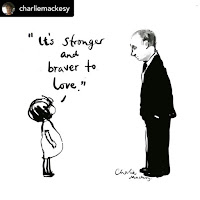
I was very lucky in the past Flight was picked by EmpathyLabUK as a Guided Reading book for Empathy in 2020 so I am very aware of how important reading can be for creating empathy. It can also be a way of dealing with difficult subjects such as invasion, war and all those frightening terms that are being bandied around at the moment. Reading a story that opens dialogue and discussions can make a huge difference. It allows children to consider what it might be like for those children they see on the news. What they might be feeling but also to understand that though bad things happen often good things can occur too and there might be a sense of hope to hold on to. This image by Charlie Mackesy is a perfect example and a great reminder of the importance of love:

 This is why I think it is important that we continue to write stories about the past because it helps children deal with the present and as a reminder to try and ensure that certain events of the past should never happen again. We need to create stories they can empathise and engage with. Writing the best stories we can. 

For inspiration read books by: Phil Earle, Lesley Parr, Emma Carroll, Michael Morpurgo, Tony Bradman, Miriam Halahmy, Ally Sherrick, Rowena House, Hilary McKay or maybe even my book Flight


Tuesday, 21 December 2021

The question is how you react

This post does relate to writing but I'm going off on a tangent first. Please bear with me. 

My feed

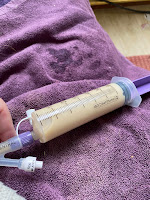
It is easy for me to become self-reflective at this time of year. Those who know me well know this story but there is a reason behind retelling it. You see twenty-one years ago this month I had surgery to help stop reflux that my body didn't respond well to. I woke up from the anaesthetic unable to eat properly. Twenty years ago this month I had PEG tube fitted. I am not going to give the long name for it, but basically, it is a tube directly into my stomach through which I can pump nutrition. It saved my life but it also meant I was deemed disabled. 

When I say I am a disabled author people see the crutches I use and assume it is connected with my joints. They are just a secondary issue. The tube in my stomach is, in fact, my disability. 

Why am I telling you this? There is a good reason I promise you. Recently I have been reading a book by Jake Humphrey's and Damian Hughes entitled High Performance. I always like to occasionally read books like this because you never know what you can share with your students. Something I read in there reminded me of the time following the surgery and the years afterwards. In the book, it talks about how you react to setbacks can make all the difference and this is your responsibility. 


After the surgery, I was very ill until the PEG was fitted. At the time, I was a single parent with three children aged 15, 13 and 11 who ran her. own business. Things could not be more difficult. I lost my business because I was too ill to work. I'd lost my identity or so it felt. I could easily have given up. The doctors even expected me to do that. But, I refused to. This was no one's fault and how I reacted was my responsibility. This was not the first time I'd had to start my life again. I'd been divorced when the children were very small and I knew I could do it again. 

People couldn't understand why I wasn't angry. But angry at who? Anger is so destructive. I couldn't change things. I had to focus on a new life and make sure my children and my mother who I cared for, were all right. The rest is history. I went to university and found a passion for learning. I ended up with a PhD became a lecturer and most importantly fulfilled my dream of becoming an author. You might think this sounds glib. Perhaps even that I make it sound easy. It was not. I had family around me. They were my tribe who supported me through the tough times and there were plenty of those which I'm not going to dwell on.

Please don't get me wrong as well, this is not meant to be a 'woe is me' post. The day the surgery went wrong was actually a great day. It meant I could follow my dreams. I'd never have had the guts otherwise (excuse the pun).

Achieving my dream!

Tangent over. Let me bring it back to writing. Being a writer is so often about rejection in some form or another. From an agent, or a publisher, not winning this award or that award, not getting the film rights, not appearing at the literary festival. The list goes on and to some extent, it never stops throughout your writing career potentially. Our friend, social media can ensure that we are constantly reminded of others' successes. My point here is how you react to those setbacks and that is your responsibility as mentioned in the book. It is well worth reading it as they expand upon this. Whatever your reactions to those setbacks are ensure you have your tribe, your people, ready. They are the ones you can talk to in the tough times. 

When trying to get an agent, wear any rejections as a badge of honour. Pay attention to what is being said in the email/letter though. Is it useful? Do you feel they might have a point? If several agents are saying the same thing in their rejection letters then you need to pay attention. Also, remember that it is one person's opinion. In the same way, an agent can reject it, it can take only one agent to like it and start your journey to publication. 

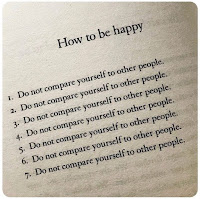
If you follow me you know I will pull this quote out frequently. It is the one from Matt Haig's Notes on a Nervous Planet where he lists a single sentence 'do not compare yourself'. This is vital when thinking how you are going to react. This is your personal journey. Others may on the surface be succeeding in everything you want, but remember that is the edited social media version. What you don't know is what they are facing behind the scenes. They will be dealing with their own rejections and setbacks. 


As far as I am concerned the most important things are to focus on you, your journey and how you react to situations while making sure you are supportive and kind to others. 

Sunday, 24 October 2021

Characterisation Inspiration

Ian McKellen
 Characters are the very life of fiction. As writers, we need to create characters that readers are going to care about and empathise with. They need to believe in them, so the characters need to come across as credible and fully rounded. 

Your setting will exist so that the character has somewhere to stand and it will help define them. You can use your setting to give clues about the character. For example, where they live gives you some hints about them - The squat vs the gated community. While the plot is more about the character discovering who they are, what their needs and wants are, in the process revealing to reader what they are really like. 

All sounds so straight forward really doesn't it? Or is it? So often I see characters in work I am giving feedback on that all sound the same and are one dimensional mean that the reader just doesn't engage with the narrative.

There are many ways and exercises you can do to get inside your characters head. For example: write a letter to you the author from the character introducing themself; answer various questions such what is their favourite music, what's in their pocket, what's their deepest secret etc.

However, I saw a really simple way to think about characterisation when I watched the brilliant actor, Ian McKellen, being interviewed by Graham Norton (Check it out on iPlayer Graham Norton Show, Friday 22nd October)  So simple in fact, it is obvious when you hear it, you wonder why you hadn't thought of it before. Sir Ian McKellen started off by pointing out how incredible it is that we are all different. Different faces, skin, hair, mannerisms, the way we walk, sit etc. He then went to show how he played two of his characters. Hamlet and his most recent one, Firs, in The Cherry Orchard. He did it purely by changing his stance in his chair. As simple as that. It was extraordinary. Hamlet was a young character where he sat up straight, while the other was an old man, so he stooped over. Just small details, but it makes a wealth of difference. 

Become a people watcher. Create a notebook where you take note of people's mannerisms, hair, the way they walk. All those small details that you can use to paint a three-dimensional picture of your character with them. It's not about info-dumping, it's about hints. The notebook will be a resource you can use throughout all your writing, not just one manuscript. Keep it is as a live document that continues to grow every time you see something. Create those brilliant characterisations just like Sir Ian McKellen did through observation.


Conan Gray - People Watching


Tuesday, 27 July 2021

Working with Editors.

I love working with editors. It is such an enlightening experience. Having said that I have been very lucky in that the two main editors I have worked with have really understood my writing and got my stories. Every time they have brought something new and good to the process. I have never once felt like it was a negative process. I do know of others where this has not been the case, so I do count my blessings.

Don't get me wrong when the email arrives with the edits attached I do have that gulp moment and have to let them settle before realising that, yes they are right. They will make the book better. I can see why they are being suggested. You don't always have to agree but you have to have a good reason not to. Editorial comments are there for discussion. They are suggesting you look at an element in the manuscript and consider an alternative way of exploring it. 

It is always important to remember that an editor's opinion is precisely that, an opinion. There is that joke that you put seven editors in a room and give them the same manuscript and you will get seven different lots of editorial comments. I can say the same about writers. If I set my students a writing task where I give them all the same opening sentence, not one of them will write the same story. It is because everything we do, whether it is writing or reading/interpreting what we read is based upon our life experiences. Our education, our upbringing, our politics, our interests. The films we watch, the books we read. Everything has an impact. If you want to get all theoretical you go down the lines of Roland Barthes and his tissue of citations. But let's not. 


This is why it is so important to be open-minded to editorial suggestions and not defensive. Don't be precious about your work. You want it to be the best it can be. You will be too close to it and you won't see the flaws, however, often you have proofread it. Believe me. There have been many a moment when I have cringed when one of my editors have highlighted something that I would have jumped on my students for doing. But I just didn't see it because I was too close to it. I confess I was mortified. Don't be hard on yourself but welcome your editor's input. 

Working with an editor is a joy because they are as passionate about your story as you are. They want to talk about your story as much as you do. Trying to talk to my family about my story is never the same. They are very tolerant of me, bless them, but they don't really care. They are not particularly interested. But your editor is. Make the most of it. Share your ideas when you discuss your editorial notes. Bounce ideas around. It is a chance to get honest feedback. 

Obviously being part of a crit group helps you get used to having feedback, but always make sure it is constructive feedback you are receiving and it is not someone trying to make the book into their book. Always listen to the feedback and ask questions about your manuscript. If you don't agree and you have a good reason not to agree, like with editorial feedback you don't have to follow it. But make sure it is a good reason and you are not just being precious about your work. 

How I envisage the latent 
process
A man reading in the garden
Honore Daumier

I spent years receiving feedback as a student then giving it as a lecturer and as an editor with the Golden Egg Academy. It doesn't make getting feedback from an editor any easier. I still get just as worried though once I have got the edits, I get really excited because I love doing editing and bringing the story to life. Making it sing by ensuring it is the best story it can be. It is all about giving yourself time for latent processing once you have the editorial notes and then enjoy the rewriting. This is why I love working with editors and as I said I've worked with two of the best, Imogen Cooper and Janet.Thomas. 

Happy writing/editing everyone!


Saturday, 10 July 2021

Writing Through - the power of reading and writing

Damian Barr
 This post has been inspired by the Radio 4 #GuideBooks with Damian Barr particularly the programme on bodies. It made me think about the books that have helped me but more importantly in this instance how much writing has saved me.

My entire life can be described in one sentence... "well, that didn't go as planned." This has been an echo throughout my life. Just when I think everything is falling into place, I can almost guarantee that something will come along and turn my world upside down. It hasn't just happened once. The one theme throughout is that in one shape or form I will write my way through it. It is one of my coping mechanisms as is reading. The writing allows me to explore the emotions involved and soothe a fractured mind.

The back page of my 
first book!

 From a small child, I have found solace in writing and reading. This photo is of the book of powems [sic] I wrote for my number 2 sister (yes, we are sometimes known by our numbers because there a few of us) when I was five maybe six and she was leaving home to go and study to be a nurse. I was going to miss her terribly and I wanted to make sure she wouldn’t forget me. The answer in my mind even then…write her a book then you will always be with her.

Whenever things got difficult throughout my teenage years. I would lose myself in books or I'd write the predictable heartfelt and fraught poems and, in my case and perhaps randomly, articles. I believe I even considered entering the Vogue young writers' competition. I can't remember whether I actually did, but I know I certainly thought about it and was convinced I would win. Having said that, I was convinced I would win the pony in the WH Smith competition every year (you'd never get away with that now!). I never did! I do also remember a time when in the second year (year 8) my English teacher read out a piece of my descriptive writing to the class. Having finished it, she looked across to me and said, 'You know Vanessa, you really can write. That was beautiful. Maybe you will be a writer one day.' There was a lot of smirking in the class as I was bullied mercilessly at the school, but for that moment I glowed. I can't for the life of me remember the name of that teacher as I have blocked a lot of memories of that school for obvious reasons. I can see her face though. I doubt she is still alive, but I wish I could tell her that I did make it eventually. Writing was a big part of my teenage years as was reading

One of my early notebooks
In my twenties, I found myself as a single parent with three very small children. At the time my way to deal with it was to read voraciously everything and anything but an awful of Joanna Trollope in the evenings when I was on my own. For childcare reasons I couldn’t go out and get a job so I set up my own business. A lot of what I did was based on writing. I wrote press releases, property features for the local paper, newsletter for the local charity, software training manuals. You name it I wrote. I quietly wrote in the evenings dabbling with fiction and poetry that no one ever saw which helped me deal with my emotions. It was the continuation of a habit. If I’m stressed or struggling I write. Never really taking the fiction seriously at that time.

Giving myself a feed
Just when things were beginning to go ok and were falling into place, I had some surgery to stop the serious reflux I suffered from. Unfortunately, my body reacted badly to it. I came around unable to swallow food and only able to take sips of fluids. There were all sorts of other implications that I am not going to include here because you really don't need to know them, but it all turned my life upside down. I was too ill to work. I became disabled. My children were my carers. I would cook for them absolutely starving and crying with hunger. It was a nightmare as it took a year for them to decide to put a PEG tube into my stomach through which I could take special feeds. It was such a difficult time because eating forms such a central part of our lives, our social life, everything really. Think of how many food-based programmes there are on television. Not being able to eat and work, I lost my sense of identity. I had no idea who I was. Yet again in my life, I had to reinvent myself. Work out who this newly disabled person was and how they fitted into this world. Once more I turned to writing. I wrote my way through it. . I have notebooks full of my witterings in. They will never be shared. All too personal and raw.


The PEG however allowed me to start a new life. To become a new person. I decided to make use of the writing that I’ve always played with. I signed up to the University of Winchester to do a degree in English because at that time the degree had modules in Creative Writing (there was no single honours degree in Creative Writing at that stage). Little did I know I was about to change my life completely. I had a chance to try on lots of different voices that included writing for children. Something I’d never thought about before and the rest, as they say, is history…I took an MA in Writing for Children, a PhD, became a lecturer and my debut novel Flight was published in 2018 by Firefly in the UK and by Feiwell and Friends in the US in 2021. Firefly will be publishing the sequel, Safe, in 2022. Writing my way through has helped me in so many ways.

I still do it, when I ended up on crutches because of joint issues, for example. Or when I cut back my hours in order to focus on my writing and build up my school visits just as the pandemic hit - perfect timing Vanessa! I will always write my way through stress and fear. I know if I don't write it has an impact on my mental health. I have learnt that now. I have an understanding.


Me, my crutches, and my crazy family at the launch of Flight.
I do my best not to let disability define me or stop me

Writing can be therapeutic, as can reading be. I have recently read an article about how reading to children in ICU can increase their production of oxytocin, which has an impact on their pain and can reduce it. It also reduces their stress levels. The writers of the article saw parents as a cost-effective intervention as they could read the stories to their own children. I am also a great believer that a book will find you just at the time you need it. It may be a little cliched, but Paulo Coelho's The Alchemist appeared in my life at a time when I needed it. The same with Matt Haig's Reasons to Stay Alive, which arrived at a moment when both myself and various people close to me were having issues with mental health. Yes, I know, the pragmatic part of my brain says, it is because you notice the write-ups of certain books when you need them. The romantic part does say they find you. Believe whatever you want to believe. The choice is yours. Writing and reading are so powerful. They will always be my salvation.


Saturday, 26 June 2021

Writing Historical Fiction - Research and the immersive experience


Only two posts ago I wrote about walking away from stories because they didn't feel right and giving it a rest for a while. I wasn't going to write. I was just going to focus on the edits to Safe when they came in. What a silly thing to state. I should have placed a bet on what happened next as I could have almost guaranteed it. 

Within a few days, an idea for a story came to me in the middle of the night. It was so demanding it woke me up! And the idea wouldn't shut up as a basic plot began to form in my head. I couldn't go back to sleep until it was done. I had no idea if it had legs. I thought maybe if I still remembered it in the morning, it would be a go-er. I did, so I wrote down the basics the following morning. This was going against everything I had said I would do. See writers never do what they say they are going to do! My writing never goes to plan.

But I am having a wonderful time. I am playing with this new story idea. It is historical again. Before I start writing it though, I have to read myself into the period. What this means is I have to do some basic background research. I spend a couple of days reading what I can about the period and the place at the time. Reading around the general history, the country, the culture, and the people. Enough to give me a sense and a feel for the place. A brief immersive experience. The more detailed research will be done when I do the editing and I will add more colour - it is all about the writing cold/edit hot process. I wrote about it here.

It is important to limit this background research because it is easy to find yourself going down many a rabbit hole as things spark your interest. There is a risk you could spend so long doing research that you avoid writing or actually forget to write the book. It is great for procrastination.

Illustration from US 
edition of Flight
by Zach Myers

However, when I am doing this research what I love the most is finding those small details. Nuggets of information that make my spine tingle. They are all very small minutiae, but I know when I use them to inspire my writing, or I include them in the narrative they will add depth to the writing and make it sing. Hopefully giving the writing a richness and a sense of verisimilitude. It is important that research despite adding richness is there with only a light touch.

This is because what I mustn’t do is overload my writing with too much detail and information in order to prove how much research I have done to the reader. Such a rookie mistake. All that does is make the writing inaccessible and boring for the reader. The quickest way to switch any reader, particularly a child reader off. It is all about leaving just enough hints on the page that help the reader paint a picture in their mind as they read, but not lecturing them or slapping them around the face with information.

The other thing I do a lot of when I am doing all this research is think. There is a lot of visualisation going on. It is once again all about the latent processing – I have written about this before too in the same place. As a writer, I see my story as a film in my head as I write and my process is all about getting those images from my brain on to the page. At the beginning of the story, as I start to create it, odd scenes appear in no particular order. They frequently give me a vague sense of the direction of the story as images from the beginning, middle and end appear.

Quite often some of the research I may include will mean nothing to the child reader, but it might do to any adult readers – of which I have quite a few. Also, there is a chance that the child reader might take it in and remember, which is why I try to do as much research as I can and do my best to get it right. I remember Imogen Cooper saying to me, it is important not to get it wrong. I've heard of people being put off a text because they found mistakes. For me, particularly when I am writing historical fiction, I am aware that I am influencing someone's perception of history even if it is fictional. A reader may take it as truth, which is why I try to do as much research as I can. 

Having said that, I do remember a time when a man thought I hadn't done my research. They accused me of basing my representation of General Patton on the actor who had played him rather than the actual person. This really stung. I had spent days and days researching General Patton as he was key to my story. I had read his memoir, war correspondence, anything I could about him, but most importantly spent hours staring at photos of him. I didn't watch the film, watching films are a last resort for me when looking at real life characters. Unfortunately, I highlighted in my novel the one facial characteristic that both he and the actor, George.C Scott, who played him in the film had - a prounounced cleft in the chin! I knew I'd never convince this person otherwise. He'd made his mind up about my researching capabilities and my book, a children's book. There are times when it doesn't matter how much research you do, someone will find fault. Be warned.

I spoke about needing the 'feel' when writing and I am definitely getting that with this story. These little nuggets of information I am finding are helping to create a truly wonderful story in my head. The emotions are there already. I hope they stay. For the moment, I am enjoying the process. Writing is the best job in the world. 

Monday, 14 June 2021

Social Media - My love-hate relationship


Fabulous social media friends
Candy Gourlay and Kathy Evans
At my book launch

I very definitely have a love-hate relationship with social media. Probably about ten years ago somebody I knew had a go at me because I used social media. They said 'you know the friendships you make on there are not real?' Well, those friendships I had made via social media then are still some of my greatest friends now. Many of them I've met in real life, and they have been with me through the highs and lows of the last ten-plus years. Proving that somebody very wrong.

I love social media because it is a wonderful place to celebrate the great news. When you shout about your book deals and publications. The wave of support is incredible. It is a wonderful way to keep in contact with friends and family too. With Facebook, I have a closed account for privacy so that my students can't access it, I am able to post things I want to share with my siblings. They can see photos of my children and grandchildren as they appeared. Plus family in Australia and the US can also catch up with what is going on here. Social media can be great for connectivity and communication. I should add, it is not just for the good times. It can be a great source of comfort during difficult times. Being like a huge hug as friends swoop around to support you.

I said I have a love-hate relationship. The hate element is because I am very aware that social media can have a negative impact on my mental health. Social media is fantastic if you are feeling positive. But if you are not having a great day, it can suck the life out of you. It can make you feel you are a total failure. You are not the one visiting all those schools, you haven't got all those events planned, you haven't got another book/film/tv deal. This is when you have to remind yourself that social media is the edited version of someone's life. Nobody shows their true life on there. You don't know know what is going on behind the scenes, what struggles they might be facing, and everyone's journey is a personal one. Plus you need to remember Matt Haig's brilliant words from Notes on a Nervous Planet: 


This phrase is my mantra!

Also, I should mention at this point an element that I have not personally, so far, had to deal with and that is trolls. There are some people out there who seem to think that because they are behind a screen it doesn’t matter what they say. It gives them a right to say whatever they want regardless of how offensive and inappropriate it is because it is 'only on social media' and therefore doesn’t count. Yes, it does! You should never write anything on social media unless it is something you would be prepared to say to somebody face to face.  You do not have a right to pass comment on somebody’s decisions, looks, children, careers, anything come to that. Don’t say anything unless it is supportive. Be kind.

KL Kettle -
brilliant author

It is also easy to become overwhelmed by social media particularly if you try to do all of them. There is not enough time in the day to do them all. Focus on what makes you happy. I confess I have taken a bit of a step back from Twitter as I find it rather shouty. I post some bits and any articles that I find interesting. More recently I have focused on Instagram. I find it a friendlier place at the moment. I have an author page on Facebook and as I said a closed personal page for the family. I am watching TikTok, in particular, K L Kettle and Kathryn Evans who are doing brilliant things on there. It is something I might explore soon. What I try to do is schedule things. I use Tweetdeck to schedule my tweets, so I don’t have to worry about those during the week. I have an Excel spreadsheet with potential tweets listed that I might use, so I do a single brainstorming session that covers a few weeks, then I just dip into the spreadsheet when I am scheduling.  I plan my Instagram – particularly if I have a campaign I want to do. I then sort out my content and save it ready to post. I might spend a Sunday morning doing that, so it is ready. I do though have times when I step right away from social media to give myself and my mental health a break. It gives me a chance to decide what I want to include next in my social media and refocus my life. Remembering what my priorities are. 

The important thing with social media is that you do what is right for YOU and what YOU feel comfortable with. There is no right or wrong (other than being kind and not abusive obviously). There is an expectation if you want to be published that you will have some social media engagement, but you have to mediate between their expectations and your needs whilst being aware of your mental health. Be social media savvy.